Virtual Encounter, Real Gifts: Reflections from the China OD Practitioner (CODP) Conference

It has been over two weeks since I returned from this year’s China OD Practitioner (CODP) Conference held on November 16-17, yet the impact of the event still lingers on my mind. I am deeply moved by the overwhelming feedback shared by participants, especially their reflections from a talk given by Peter Block, which was streamed via video.

Some Background

The CODP Conference is an annual gathering organized by the Innovative OD Center (IOC), an OD training and consulting firm based in Shanghai. This event fosters connections among OD practitioners in China and helps them share best practices, learn new perspectives, and deepen their sense of community.

The gathering of this year had a special significance as it was a celebration of the 10th anniversary of IOC’s most foundational program, the Competencies in OD Certificate Program. Close to 80 graduates participated in this gathering, representing about one-third of all alumni. As a graduate of the 10th OD Certificate Program, I am lucky to be one part of this growing community. 

The “Encounter”

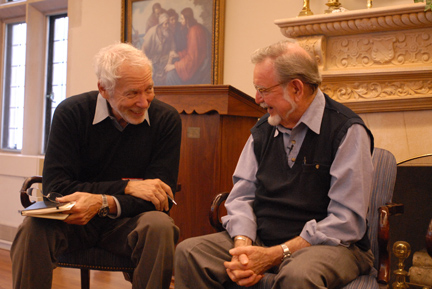
Peter Block’s name is familiar to everyone in this community as his book, Flawless Consulting (3rd edition) has been one of the two pre-reading books for the OD Certificate Program in the past decade. However, the conference was first time that the participants finally “met” Peter, albeit virtually, through a 26-minute video excerpt from a recent 80-minute Zoom interview conducted by IOC.

The video played on Day 2 of the conference during a session focused on envisioning the community’s next 10 years. Peter’s insights addressed profound and wide-ranging topics:

  • The essence and value of OD in a world of uncertainty and change
  • Bringing authenticity into organizations often dominated by the “head” rather than the “heart”
  • His journey to becoming a Master of OD
  • Transitioning from organizational to community-focused work
  • Shifting people’s mindsets from being consumers to becoming co-owners of their communities

The Gifts

Unexpectedly, watching a short video recording turned out to be the highlight of the conference. In the small groups that were convened immediately after watching the video, many participants shared that they were deeply touched and inspired. In the WeChat group for the conference, many shared similar reflections.

The momentum continued even after the conference was finished. I saw many participants posting photos of Peter on video in their WeChat Moments, together with the lines that struck them most.

Here are just a few of the lines shared:

  • “The essence of OD is that relationship and our connection to each other is what produces outcomes.”
  • OD is…confronting people with their gifts, confronting with what you want to bring to this place.
  • “We’re not trying to protest or change anyone. We’re looking for people looking for us.
  • “When you choose to treat people as subjects rather than objects, you’re going to feel lonely. And that’s why we need each other.”
  • You’re not trying to convince anybody. You’re an invitation. You’re not a mandate. 
  • “That’s the magnet you are and the container you are for your culture.”
  • Leadership is to step into an uncertain future, to believe and face ourselves that we can create the future, even though we can’t predict it.
  • “The future always exists in the present.”

Meaningful Reflections

With curiosity, I asked some of the participants, “What made those particular words meaningful to you?” Here are some of their responses:

  • “Our work of HR and OD treats ‘people’ as the end instead of the mean. However, we often feel lonely and frustrated, because most people around us are focusing on the ‘things’ only. And I feel greatly comforted by Peter’s words that we just need to look for people looking for us.” (Leslie, an HR leader of a new energy automotive company)
  • “Treating people as subjects instead of objects is so important for our time. Nobody can be all-powerful, and we need everyone to be agent and give full play to our creativity.” (Jinfeng, a former sales leader of a bio-pharmaceutical company.)  
  • “Peter talks about the essence of OD and community in such simple but powerful words. And his way of talking just demonstrates authenticity. This encourages us as OD practitioners to trust and confront ourselves–we can create the world we want to inhabit.” (Victoria, an independent EQ and leadership coach, and OD consultant.)     
  • “Everyone is trying to make a change, and the change does not happen in the future but starts from now. And my reflection is how I can become to be the magnet and the container for that change.” (Wing, OD Head of a chain catering enterprise.)

Immediate Application

One outcome that was particularly inspiring to me was an action immediately taken by the Dream Team responsible for co-designing the conference made up of six volunteers from the OD practitioner community. Vera, one of the Dream Team members and an OD consultant of IOC, shared with me:

“I heard Peter talking about the subtle differences of questions, and I suddenly realized that our questions designed for collecting participants’ feedback on the conference were all ‘consumer’ questions, for example, ‘What attracted you to the conference?’ and “What is your takeaway from the conference?’ I discussed this with the rest of the team, and we immediately decided to change them to ‘ownership’ questions- ‘What intention did you bring to the conference?’ ‘Did you realize your intention?’”

Gratitude

As Maria Wang, the founder of IOC, reflected, “Peter’s presence made a difference to the conference. His words evoked and provoked a lot of thinking and reflections on OD and community. They are such precious gifts to our conference participants.”

Thank you, Peter, for the abundant gifts you brought to OD practitioners in China. Your words continue to inspire, guide, and elevate this community.

Article written by Mei Hong

Honoring John McKnight & The Gift He Was

We are deeply saddened by the loss of John McKnight, a dear friend, author, professor, and co-founder of the Asset-Based Community Development Institute.

John laid the foundation for the work that we do in community. Because of him, our focus is always on gifts, not deficiencies. Because of him, we focus on possibility instead of problem.

The Abundant Community: Awakening the Power of Families and Neighborhoods, which John co-authored with Peter Block, reminds us that the greatest power we have collectively is to treat our neighbors with compassion, care, and curiosity.

To celebrate John’s legacy, we would like to share his final writing, From Reform to What Works: Moving from the Limits of Institutions to a Culture Powered by NeighborsWithin its pages, you will find thirteen stories of the power of association to mold the future of communities around the world. 

Ambiguity is the Enemy of Good Agreements

In every aspect of our lives, we make agreements with other people, from day-to-day decisions like where to go to dinner to monumental topics like how we want to achieve our strategic/life goals together. 

We are often disappointed with the results no matter what kind of agreements we make. The other person doesn’t follow through, and I fully understand the changes I would have to make, so I don’t follow through. Even when we do both follow through, we often still don’t meet each other’s expectations. 

When I reflect on the agreements that were not effective for me, I realize there was some level of ambiguity present.  We tend to agree to things at a high level without getting very specific. 

Ambiguity is the enemy of good agreements.

Why do we choose to be ambiguous?  Yes, it is a choice.  It may not be a conscious choice, but it is a choice.  One reason may be that if I stay at a high level, it is easier to get someone’s agreement.  Without specifics, there is less risk. 

In Flawless Consulting®, we talk about sharing our “technical” wants (What are we going to do together?. We also share our relational wants (How are we going to work together?). 

Both technical and relational wants are important ingredients for a good agreement.  However, if I’m too ambiguous, we still won’t be effective with each other.  

An example of an ambiguous technical want is when I ask you to meet with me regularly to share the status of a project. That is relatively easy to agree to. However, if I ask you to meet with me for 30 minutes every Wednesday at 10:00 a.m., that might need some negotiation. The latter is more specific and will help us reach a deal that works for both of us.

For a vague relational want, I might ask you for your support on a project.  Again, it is easy to say yes.  It also is so ambiguous that neither one of us will be satisfied.  We didn’t really agree to anything.  At best, you will support me in the way you want to. And, it may or may not align with what I want.  Most likely, it won’t align.  I need to be more specific in my initial ask. 

A great antidote to an ambiguous agreement is to ask yourself, “What would it look like?’  In this example, instead of asking for support, I would ask myself, “What would it look like if you were supporting me?”  To get more specific and less ambiguous, I could ask you to introduce me to your team and be an advocate for our project.  Again, this might take some more time to negotiate, but in the end, we will build a much more effective relationship by being specific.  Specificity is the antidote to ambiguous agreements.

I have found that the relational elements of an agreement are the hardest to get specific about. I am more comfortable asking for support, collaboration, partnership, buy-in, sponsorship, etc., but I am less comfortable describing what each of these would look like. We end up with poor agreements because we don’t get specific. 

So, if you find yourself frustrated with one of your relationships, reflect on how specific you were when you asked them for something.  If you were ambiguous, re-negotiate the agreement with specifics.

Ambiguity is the poison for good agreements, and specificity is the antidote.

Article by Jeff Evans

Learn more about making good agreements here.

Why Expertise Alone Fails: The Partnership Secret Behind Flawless Consulting

Consulting isn’t just about offering expertise—it’s about building authentic relationships and fostering trust.

That’s one of the most important of the many insights from Peter Block’s Flawless Consulting: A Guide to Getting Your Expertise Used, a book that has transformed the way countless individuals and organizations think about the role of consultants. But, here’s the key takeaway: this approach doesn’t only apply to consultants—it’s relevant to anyone who needs to work in collaboration. And it’s the backbone of our most popular workshop.

The Humanity in Consulting

What makes the promise of Flawless Consulting so unique and effective is its emphasis on partnership over expertise. Too often, consultants focus solely on delivering technical solutions; this is where they get stuck. The reality is that people choose to work with you based on how they make you feel- facing that reality is key to success.

As Peter Block emphasizes in all of his work, the real challenge is creating relationships that lead to long-term change.

The Power of Authentic Conversations

At the core of this approach are authentic conversations. These conversations are about wants, expectations, risks, resistance, and trust. In the workshop, we guide participants through strategies for having candid dialogue that allows both consultants and clients to operate in transparency when working together.

“Being right is not enough. You need enough leverage to have your point of view considered.”

Peter Block, Flawless Consulting.

From Expertise to True Partnership

One of the biggest mistakes a consultant can make is assuming that expertise alone will lead to success. The truth is that expertise without partnership rarely drives sustainable outcomes. Being a flawless consultant isn’t just about problem-solving; it’s about co-creating solutions with the people we serve.

 In our Flawless Consulting® workshop, participants dive deep into shifting from merely a pair-of-hands or experts to a true partnership. This is a vital shift that makes all the difference. Even if clients don’t know it yet, they prefer a partner over someone who simply tells them how to fix things. When consultants come in with band-aid solutions, it typically means the client will have to eventually engage another one. Why? To come in and clean things up because the solutions the former offered didn’t last.

Why People Keep Choosing Flawless Consulting

Clients continue to choose the Flawless Consulting workshop because it offers more than just technical training. It equips people with the ability to influence, create meaningful change, and deliver results that last.

Through flawless principles, our workshop teaches professionals how to step into true collaboration, ensuring that the client and consultant contribute equally to the process. Our approach is experiential, grounded in real-world applications, and designed to shift mindsets. The learnings stick.

If you’re ready to move beyond transactional consulting and embrace a deeper, more meaningful way to work with clients, colleagues, and bosses, we invite you to join us for our next Flawless Consulting workshop. You’ll not only dive into the principles from Peter Block’s timeless book but also experience the transformative power of partnership in action.


What people are saying about Flawless

“I have been a ‘student’ of Peter Block and his work for some time.  His philosophy and approach have shaped my own in my work.  I ‘got’ Flawless. And then I took the course. Through the excellent facilitation and exploratory discussions with classmates, the concepts found in the book took on new meaning. I developed a deeper and broader understanding of how to approach a consulting project, from relationship-with-the-client formation to determining the real issues to address and my role in doing so.  Methodologies were introduced that are invaluable. The book is still important and in a league of its own.  The class adds layers of value and is outstanding for becoming a truly exceptional consultant.”

Robin LeBlanc

Flawless Consulting: Setting Strategic Vision

Thirteen years ago, I joined Designed Learning as an independent contractor to assist in marketing and sales. I knew absolutely nothing about Designed Learning, Flawless Consulting, or Peter Block. I knew even less about setting strategic vision and its importance to organizational effectiveness.

So, What’s the Point?

Learning the skills to avoid siloed work environments and embrace collaboration within the entire organization is essential to successful outcomes. Setting strategic vision includes establishing realistic goals and working with others — fully utilizing the expertise of all.  It is also about communicating effectively, developing working agreements across organizational boundaries, and solving problems long term. The results include increased job satisfaction, employee commitment, and bottom-line improvement.

Setting strategic vision means learning to convene others in a way that quickly builds connection and trust. It creates a personal view that you are part of something larger than yourself, the people you work with directly every day or a single client. You learn to look beyond the immediate and begin to hold yourself accountable, voluntarily committing to the well-being of the whole.  Acquiring these valuable skills will ensure that every project and conversation moves the organization forward in a positive direction.

How It’s Done

Flawless Consulting® develops tools that enable participants to be more strategic in their thinking and more effective at solving problems. These essential skills include:

  • How to recognize resistance in your clients and learn a technique to move forward effectively.
  • How to be assertive.
  • How to probe for underlying issues.
  • How to deliver feedback in a way that honors the client but challenges them to act.

During the experience, participants practice in real time the skills needed to have their expertise used. Every phase is discussed and practiced ensuring that no phase is skipped or ignored for the sake of expediency.

The first and most critical phase of Flawless Consulting is Contracting. Contracting is about building trust, exchanging wants and offers, and deciding what you’re going to do together and how you’re going to do it. In other words, establishing a working agreement. The success of the entire project and the decision to act and implement a lasting solution is incumbent on this initial phase.

During Flawless Consulting, participants also learn what role they typically choose as a consultant and partner: Expert, Pair of Hands or Collaborative.  

The skills learned in Flawless Consulting are essential in setting a strategic vision. Putting them into practice means ensuring that every person’s expertise is fully utilized, accountability and commitment are chosen, and individual success is achieved. More importantly, Flawless Consulting creates a culture of collaboration, sets strategic vision, and ensures the health and success of the whole.

Article by Chris Witt

Transforming Leadership for Equitable Change: Introducing Leader as Convener

In our pursuit of more equitable, sustainable, and community-oriented systems, we often overlook a crucial element: how we come together. At Designed Learning®, we believe that the way we convene can be as transformative as the work itself. Our “Leader as Convener” program offers a paradigm shift in how we perceive and address societal issues, reimagining leadership for the common good.

This approach advocates for reimagining our relationships with human capital, natural resources, financial systems, and social connections. It calls for an end to commodifying humanity, a renewed respect for nature, a reevaluation of financial practices, and the building of social capital through trust and citizen engagement.

Whether you’re an impact investor, a foundation catalyzing systemic change, or an NGO empowering communities, the way you bring people together matters. Traditional hierarchical leadership often falls short in addressing complex, interconnected challenges. Leader as Convener offers a new perspective, emphasizing focusing on gifts rather than deficiencies, possibilities over problem-solving, and balancing covenants with well-structured contracts to ensure both relational trust and clear expectations.

Envision meetings where power dynamics are neutralized, every voice is heard, and authentic commitment replaces lip service. Picture conversations that move beyond problem-solving to possibility thinking, where diverse strengths are recognized and leveraged. This is the essence of our program.

Leader as Convener equips leaders with skills to facilitate Six Conversations That Matter®:

  1. Possibility: Shifting from problems to potential
  2. Ownership: Moving from blame to accountability
  3. Dissent: Encouraging healthy disagreement
  4. Commitment: Transforming intentions into action
  5. Gifts: Utilizing diverse strengths
  6. Invitation: Extending genuine, inclusive calls to participate

This approach encourages leadership by convening and motivating citizens to actively participate in shaping their communities and narratives. For those in urban development, manufacturing, or sustainability, it boosts collaboration with diverse stakeholders, fostering inclusive decision-making for economic development and business associations. Academic institutions studying sustainable development gain a new perspective for effective community engagement. In large corporations, this approach shifts traditional hierarchies to more collaborative environments, enabling managers to facilitate meaningful conversations, foster team ownership, and ensure all voices are heard. This results in greater employee engagement, improved decision-making, and innovative problem-solving.

This program isn’t just about improving meetings; it’s about transforming how we work together to create change. It’s about building trust, fostering belonging, and creating conditions for true collaboration and innovation. By focusing on gifts and possibilities, we can create a more inclusive and sustainable future.

As we face unprecedented challenges in creating equitable and sustainable systems, we need new ways of leading and convening. Leader as Convener offers a path forward, helping us harness our collective wisdom and power to create the future we envision. It’s a call to action for all of us to rethink our roles in society and at work, and how we can contribute to positive change.

Article by Derek Peebles.

Learn more about Leader As Convener by downloading this free eBook by Peter Block.

Resistance is Predictable

 “Resistance is not only predictable and natural; it is a necessary part of the learning process.”  – Peter Bock, Flawless Consulting: A Guide to Getting Your Expertise Used

When it comes to your ideas and beliefs that you hold, it can be challenging to take a step back and see your views clearly. As humans, we feel most at peace when we stay in our comfort zone. When you are around new people, places and are introduced to concepts that seem completely different from your own, you may initially resist accepting these things. Change is something that many people have a challenging time receiving as it requires us to adjust our habits. These routine behaviors and preferences make us feel secure because we know their patterns and how they will inevitably make us feel. 

We all face hardships and obstacles in our lives that cause us to be discouraged. We resist negative psychological pain to keep going. It is normal to deny these unfavorable feelings because we believe that it will be better for our mental health in the long term; this is rarely the case. In fact, this suppression of uncomfortable emotions will cause a greater blow back in the end. If you learn to accept how you’re feeling, rather than resisting what makes you uncomfortable, you become free of fear.

Through this learning process, you will gain awareness of how you subconsciously think and feel. To be an individual who is self-aware is a double-edged sword. While you can consciously understand the patterns you display, you may also get invested in analyzing these behaviors. It’s important to focus on the positive change that can take place, rather than drowning in pessimistic introspection. You must be intentional with being a more open-minded person to grow.

Take it Easy – Manage Your Resistance

Peter Block tells us that, “If things are not going well, I am a player in them not going well. So, I must ask myself, what’s my contribution to the difficulty I am experiencing with the world?” Through this process of self-analyzing, you can uncover your underlying doubts, insecurities, and fears that are holding you back. Effective change for yourself can happen at a more accelerated pace as you are clear on what you are resisting.

According to Psychology Today, you can begin to accept resistance as a good thing when you become aware of your mental and physical state, and the thoughts that accompany this. Try selecting one day out of your week to purposefully check in with how you react to certain things you encounter. If you experience any resistance, choose to relax your body and mind instead. You may take a few deep breaths or focus on a happy thought. Through deliberate practice in understanding your resistance to yourself and others better, you will automatically live a more peaceful life.  

Article by Rebecca Crowell

Rebecca Crowell is a Designed Learning intern and graduate of Social Sciences at the University of Central Florida. She is currently pursuing her graduate degree in Clinical Mental Health Counseling at Stetson University in Deland, FL.

Finding Balance: Work and Life

“The goal is to balance a life that works with a life that counts.” – Peter Block, The Answer to How is Yes.

If you want to live a healthy life that benefits your mind, body, and spirit, then it’s important to be intentional about incorporating balance in all areas of your life. Balancing your responsibilities and roles as an individual can feel especially overwhelming when there’s little to no time to put aside during your daily routine.

Workplace stress is rampant, so it’s vital to monitor our mental health to effectively represent ourselves to our co-workers, our employers, and ourselves. Research from the World Health Organization states that 83% of US workers suffer from work-related stress, and 54% of workers report that work stress affects their home life.

Many of us prioritize competing deadlines, attending meetings, and working overtime to feel accomplished in the workplace. It feels rewarding to put all our energies into our careers so we may thrive and advance in our respected companies, but this comes with a cost. If your work-life balance is off-kilter, your mental health will start to decline, and inevitable stress will ensue.

The first step to feeling more fulfilled and at peace is knowing whether your work-life balance is healthy or unhealthy. You may think that overtime and endless hours of work are normal. However, if they’re becoming an issue for your health, it’s vital to address them. The Mental Health Foundation suggests five steps for addressing your work-life balance situation.

How to Find Balance:

  1. First, ask yourself what is causing your stress and how it affects your work and personal life.
  2. After addressing the cause, sit with those feelings. Are you angry with your situation now? Confused?
  3. Next, you’ll become more proactive by brainstorming ways to reduce your stress. Could you come home early one night a week to spend time with your family? Reprioritizing what’s important to you in the current moment will leave you feeling more at peace.
  4. After considering a few alternatives, consider how your work could accommodate these priorities. Then, you should speak up about these concerns and ideas for change with your employers.
  5. The last step is to follow through with making these changes. When talking with your boss, try asking for more flexible hours, remote work, or adjusting your designated days off. Contract on what you want or don’t, and work to reach an agreement that works for all.

“Choosing to act on what matters is the choice to live a passionate existence, which is anything but controlled and predictable,” says Peter Block in The Answer to How is Yes. “It is the challenge to acknowledge that just because something works, it doesn’t mean that it matters.” He asserts that a “life that matters is captured in the word yes,” where yes expresses our willingness to claim our freedom and use it to be a “player instead of a spectator to our own experience.”

Our mental health is indispensable; living a life that counts means prioritizing it effectively. It is “being a player in our own experience,” dedicating time towards our relationships with family and friends, leisure activities, and spaces outside of the workplace to reduce the burden that work may bring where winning back the practical balance of our life allows us to say yes to being more present and finding joy during our busy routines.

Article by Rebecca Crowell

Rebecca Crowell is a Designed Learning intern and graduate of Social Sciences at the University of Central Florida. She is currently pursuing her graduate degree in Clinical Mental Health Counseling at Stetson University in Deland, FL.

Managing your Inner Critic

“All we have to do to create the future is to change the nature of our conversations, to go from blame to ownership, from bargaining to commitment, and from problem-solving to possibility.” – Peter Block, Community: The Structure of Belonging.

We all have our inner critic—that voice that accompanies us throughout our day and interprets what we experience. This voice can be positive or negative, depending on our circumstances and how we navigate them. Unfortunately, we are more often drawn toward negative self-talk and thinking as we continuously face our fears and insecurities.

Everyday stressors can lead us to create a pessimistic narrative about our lives. When the obstacles we face are overwhelming and seem impossible to overcome, it becomes easy to feel shame, self-doubt, and negativity.

On the other hand, our inner critic can be a powerful ally if we engage in positive self-talk. We can choose to own our emotions and act towards increasing self-worth. Then, we empower ourselves to take control of our lives.

Becoming a friend to your Inner Critic

If you want to change the nature of your conversations with yourself, there are a few things you can try:

1) First, pay attention to how you speak to yourself.

The voice in your mind combines your conscious and unconscious thoughts and beliefs, either positive or negative.

2) Become aware of when you are kind to yourself.

Reaffirm possibilities like, ‘I can accomplish this’ or ‘I am capable.’ This will help you focus on being more intentional with positive thinking, and with practice and time, productive thinking like this will become second nature.

Recognize when you’re engaging in negative self-talk, like ‘I can’t do this’ or other thoughts accompanying feelings of doubt. Acknowledging when we’re actively engaging in harsh self-talk is a powerful step forward in reframing how we speak to ourselves and remaining present for future situations.

3) Think in Third-Person

Instead of thinking in the first person, replace the “I” in your inner monologue with your first name. According to an article in Psychology Today, this allows you to detach from the power of your thoughts. The space from those emotions decreases the possibility of overthinking and ruminating on negative beliefs.

Negative self-talk is, well, negative. We are our biggest critics of how we perform at work, how we treat our families and friends, and how we treat ourselves. It’s called the negativity bias, and we are naturally more susceptible to negative information and can more easily become addicted to it. So, while many of these thoughts and beliefs are untrue, reframing our mindsets into thinking positively about ourselves and others is much harder once we engage in negativity.

Creating a positive future is different from defining one. If we want to change how we engage with ourselves, we must shift our thinking and speak by focusing on possibilities, commitment, and ownership, not blame, bargaining, and problem-solving. Nurture your gifts, introduce loving self-talk, and change the nature of your conversations to usher in a newfound internal freedom.

Article by Rebecca Crowell

Rebecca Crowell is a Designed Learning intern and graduate of Social Sciences at the University of Central Florida. She is currently pursuing her graduate degree in Clinical Mental Health Counseling at Stetson University in Deland, FL.

Live by The Rules You Create

“The hardest thing for any of us is to live by the rules we ourselves create. It’s difficult enough to live by the rules that others create. It is brutal and fierce to live by the ones we create ourselves.” – Peter Block, The Empowered Manager: Positive Political Skills at Work.

Society means having laws, social norms, agreements, and rules. There is a structure to our way of life and how we function in social and professional settings. Indeed, all aspects of our lives involve rules that classify what’s right and wrong and tell us to behave accordingly. These rules, created by others and even ourselves, can be hard to live by.

In the book The Four Agreements, author Don Miguel Ruiz discusses the ‘dream of the planet,’ or society’s dream, which includes all the rules, beliefs, cultures, etc., passed down from generation to generation. From the beginning, humans have learned from those around us, including our family, teachers, and friends. We agreed because that’s all we knew. Through our bonds, we began to believe these adult beliefs as our own.

As time passes, we continue to develop and realize that we may believe very different things from those in our early life. We form our own identity as adults and move on to new opportunities. These experiences expose us to others who open our minds and help evolve our thinking. We see our narrative begin to shift, to change.

“We need to distinguish between the stories that give meaning to our lives and help us find our voice and those that limit our possibility,” says Peter Block in Community: The Structure of Belonging. “But our version of all of them, the meaning and the memory that we narrate to all who will listen, is our creation—made up. Fiction. And this is good news, for it means that a new story can be concocted any time we choose.”

It is brutal to live by the narratives we create for ourselves. It is even more so when we live a life agreeing with beliefs that are not ours. Block explains that to create a new story, we must first come to terms with the current one. Name it, be fierce in confronting your creation, and then choose to rewrite it. It is the key to personal freedom. It opens the door to a new story being written… one in which you control your happiness. In this story, you view yourself with love and treat others with kindness. You show up as the best version of whatever story that YOU choose to tell.

Article by Rebecca Crowell

Rebecca Crowell is a Designed Learning intern and graduate of Social Sciences at the University of Central Florida. She is currently pursuing her graduate degree in Clinical Mental Health Counseling at Stetson University in Deland, FL.